
Because leadership is not performance

Why leadership is not performance

We believe in authentic leadership: people trust leaders who lead as themselves. Leadership is not performance, in two ways. The technical results firms promote engineers for don't make them good at leading people. And acting the part of a leader, the way many courses teach, doesn't work on technical teams. Leaders grow when they see how they lead, understand why, and build on it. "Leadership is not performance" is the tagline of our symposium, and the idea behind every program we run.

  • Who it's for

    Engineers who now lead people, and the leaders who promote them.

  • What's inside

    What an accidental manager is, why traditional training fails, and what changes behaviour.

  • Two meanings

    Technical results don't make a leader, and acting like one doesn't either.

The idea

What does "leadership is not performance" mean?

On Friday you were the best engineer on the team. On Monday you lead it. The skill that won you the job and the skill the job now needs are different skills.
Many firms then try to close that gap with a course that asks you to act. To a rigorous mind, acting reads as fake. We start with who a leader already is, and build from there.

Definition

Leadership is not performance: the belief that strong technical results don't make someone a leader of people, and that acting the part doesn't either. Leaders earn trust by leading as themselves, with skills they have practised. We call that authentic leadership.

Technical performance vs leadership
From accidental to authentic. Technical performance and acting the part don't get you here alone.
Part 01

Great engineers get promoted. Then what?

Firms promote for one skill and judge on another.

Leadership is a social act.

Many technical firms pick the person with the strongest results, the one who solves the hardest problems and never misses a detail. Then they hand that person a team, a budget and a set of people problems, and judge them on how they lead.
You work longer hours and still feel behind. The habits that earned the promotion start to work against you.

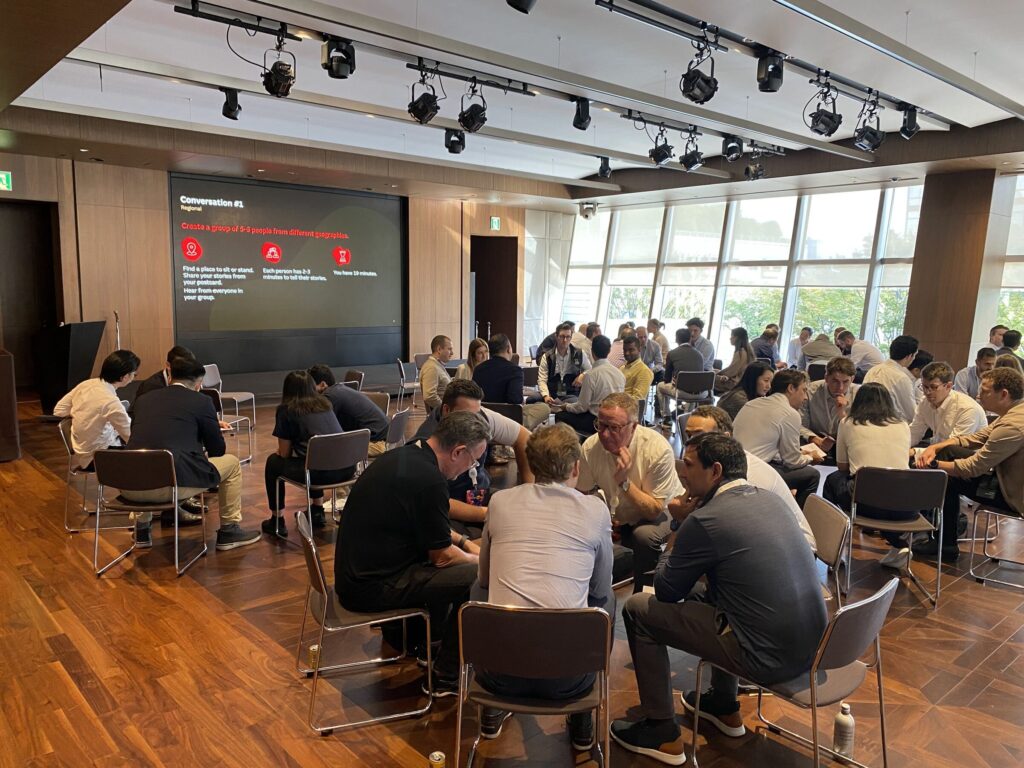
Why engineers struggle as managers
Leaders working together in a group session

82% of people who step into a management role in the UK have had no formal management or leadership training. Source: Chartered Management Institute with YouGov, October 2023.

Three habits that start to work against you

  1. 01

    You own the answer, so your team waits for you.

  2. 02

    You check every detail, so you become the bottleneck.

  3. 03

    You fix problems yourself because it's faster, so your team doesn't learn.

Part 02

What traditional training gets wrong

Engineers learn to trust evidence.

Many leadership courses try to close the gap with a performance. Act more confident. Project executive presence. Then role-play it in front of your colleagues. When a course asks engineers to put on a character, many switch off. They sit through the day, collect the certificate and go back to work the same as before.

The course asks Act like a leader
The engineer hears Be someone you're not

Three things traditional training asks for

  1. 01 Confidence

    "Act more confident"

    Engineers trust what they can check. Confidence without evidence behind it reads as a bluff.

  2. 02 Presence

    "Project executive presence"

    A borrowed manner lasts until the first hard meeting. Then the old habits come back.

  3. 03 Style

    "Be more driver, be more expressive"

    A label from a course tells a leader who to copy. It doesn't show them how they lead now.

In Cam's words

"Leadership should be natural."

"Engineers don't like doing things that aren't authentic to them. They don't want to be told to be more driver or more expressive. Leadership should be natural." Cam Smith

Our founder was one

An electrical engineer who had to learn to lead

Cam Smith holds an Honours degree in Electrical and Computer Systems Engineering and started as a power systems protection engineer. He spent 21 years leading in heavy industry, utilities and construction. He ran operations, won big contracts and rose to general manager and CEO roles. He learned the people side by observing and analysing the best and worst of the leaders around him. Then he found his passion in developing people, and has spent over 14 years developing leaders at more than 60 companies across APAC, the UK and Europe.

Meet Cam
Part 03

What changes behaviour

The work starts with the person you already are.

Engineering leaders in a workshop

Three things change how a technical professional leads. Each one works with who they already are, so leaders keep their own character.
Technical professionals design every program, and we train every facilitator to work with a technical audience. We build each program around your projects and in your company's language. People learn a model, practise it under pressure, then review what worked.

  1. See
  2. Understand
  3. Practise

Three things that change how a technical professional leads

01 Reveal

See how you lead

In a group simulation, under real time pressure, people stop acting. You see how you behave when the stakes rise.

Leadership simulations
02 Explain

Understand why

Insight without measurement is opinion. The GreyScale explains the traits behind your behaviour, when they help, when they hurt, and the effect you have on your team.

The GreyScale
03 Develop

Practise new habits on real work

Models only matter once you use them. You learn, simulate and evaluate on your own projects, through workshops, coaching or a Learning Academy, until the new habit holds.

See all programs
Where to start

Pick the path that fits where you are

Accidental managers sit at every level. Some started leading last month. Some have led for ten years and still feel they're winging it. Start where you are. New to leading people: read our guide to moving from engineer to manager, then look at From Accidental to Authentic. You promote engineers into leadership: take the 3-minute diagnostic for your team, or send us a message. You've led for years and feel stuck: join The Practice, a peer group of leaders who face the same problems.

Peer group · First intake: late January 2027

The Practice

The Practice brings leaders together to make sense of real cases from their own work, using the Balint Method in a facilitated group. We run it in-house or as public cohorts. The first intake starts in late January 2027, in APAC and in the UK and Europe.

Register your interest
Compared

Technical performance vs leadership

The habits that earn the promotion, and the ones the new job needs.

Your own results / Your team's results
What you're judged on Your own results Your team's results
Hard problems You find the answer You help the team find it
Detail You check every detail You decide which details matter
When it's urgent You fix it yourself You coach someone through it
How you grow Deeper technical skill Practised people skills, built on who you are

Every row on the right is a skill, and engineers learn skills well.

How the Authenticity Cycle works

Lead as yourself, starting with your team

Send us a few details and we'll tell you where your leaders could start.

  • Tell us where your leaders get stuck.
  • Hear where we would start, and whether we can help.
  • Send us a quick message. A real person replies within two business days.
“Leadership should be natural.” Cam Smith

Send us a message

Indicates required field

We reply within 48 hours (business days).

We only use your details to reply to your enquiry. Privacy Policy

Questions about leadership and performance

What does "leadership is not performance" mean?

It is our case for authentic leadership, and it means two things. Strong technical results don’t make someone a good leader of people. And acting like a leader, the way many courses teach, doesn’t build real leadership either. Leaders earn trust by leading as themselves, with skills they have practised.

Why do engineers struggle as managers?

The habits that make a great engineer, like owning the answer and checking every detail, slow a team down when you lead it. Many firms also promote engineers with no training in the people side of the job. In the UK, 82% of new managers start with no formal management training (CMI with YouGov, 2023).

Why engineers struggle as managers

Is an accidental manager a bad manager?

No. An accidental manager is someone promoted for expertise without leadership training. Many become excellent leaders once they get support that respects how they think.

Can leadership be taught to engineers?

Yes. Leadership is a set of skills, and engineers learn skills well. Training that asks them to act fails them. They learn from evidence about how they lead, plus practice on real work.

How does this idea connect to the Authenticity Cycle?

“Leadership is not performance” is the belief. The Authenticity Cycle is the method we built on it: Reveal shows how a leader behaves under pressure, Explain decodes why, and Develop turns that into new habits. The cycle then repeats as the leader moves up.

Authenticity Cycle

Ready to lead as yourself?

Tell us where your leaders are stuck. We'll tell you honestly whether we can help.